General
Canada’s Auto Industry Capital Braces for Trump Tariffs
Windsor, Ontario, right across the border from Detroit, has close ties to the United States but now faces exceptional economic disruption.

After about a week of conflicting signals, the new Trump administration announced that the long-threatened 25 percent tariffs on imports from Canada and Mexico would take effect on Saturday, the first salvo of what is expected to be a trade war between the allies.
[Read: Trump Will Hit Mexico, Canada and China With Tariffs]

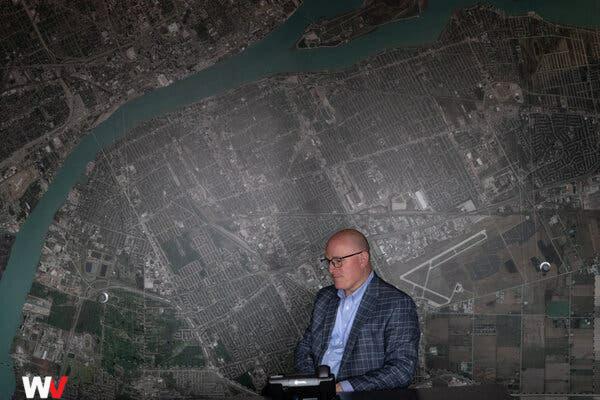
Drew Dilkens, the mayor of Windsor, Ontario, says cities will need help their residents deal with the effects of U.S. tariffs.Credit…Ian Willms for The New York Times
When Karoline Leavitt, the White House press secretary, confirmed the timing on Friday, she repeated President Trump’s claim that Canada and Mexico were not blocking the flow of migrants and fentanyl across the border. But Vjosa Isai, my colleague based in Toronto, has looked into the fentanyl trade in Canada and found that by any measure its effect on the United States is minimal — nothing like the flow of illegal drugs into Canada from the United States.
[Read: Trump Calls Canada a Big Player in the Fentanyl Trade. Is It?]
Similarly, Canadian officials have argued that significantly fewer migrants cross into the United States through Canada than through Mexico, and that even so, Canada has taken steps to increase border security.
Nevertheless, the tariffs are here. Many questions remain unanswered, including whether Canadian oil will be exempted. More broadly, though, what does Mr. Trump want to achieve?
My colleagues Ana Swanson and Alan Rappeport, who reported from Washington about Mr. Trump’s trade battles during his first term in office, write: “Mr. Trump has long wielded tariffs as a weapon to resolve trade concerns. But the president is now frequently using them to make gains on issues that have little to do with trade.”