
General
America Can Still Build Homes — for Professional Sports Teams
People who say that the United States can’t build anything anymore must not be sports fans. Barely a year goes by without the debut of a sparkling new stadium or arena, often in the very cities where it’s most difficult to build almost anything else …
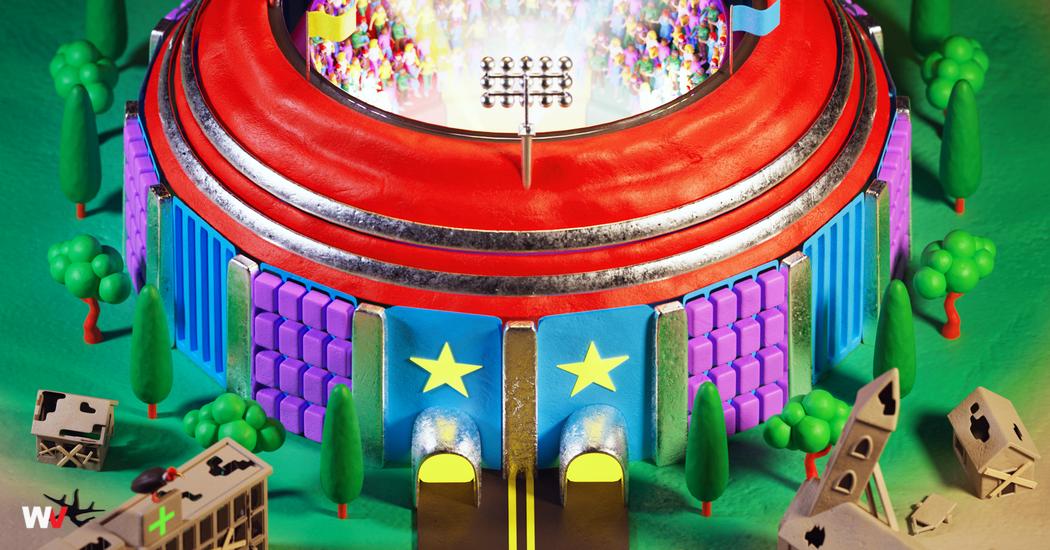
People who say that the United States can’t build anything anymore must not be sports fans. Barely a year goes by without the debut of a sparkling new stadium or arena, often in the very cities where it’s most difficult to build almost anything else. A $2.3 billion baseball stadium in the Bronx. A 70,000-seat football stadium in the middle of Los Angeles County. A basketball arena on the San Francisco waterfront.
The latest example, announced last month by the mayor of Washington, D.C., is a $3.8 billion plan to build a stadium for the local football team, the Washington Commanders, on 180 acres of public land just two miles from the Capitol.
Washington is not an easy place to build housing, but no one should doubt the capital city’s capacity to build a stadium. The city opened a basketball arena in 1997, a baseball stadium in 2008 and a soccer stadium in 2018. In Washington, as in other American cities, homes for sports teams are the only kinds of homes that still get built.
The obvious reason is that sports are popular. Especially the N.F.L. When the Commanders win, Washington wakes up in a better mood. It doesn’t require a political science degree to understand why the city’s mayor, Muriel Bowser, is eager to persuade the team to return to Washington after a few decades in the Maryland suburbs. She wants to be popular, too.
But Ms. Bowser’s unseemly, almost desperate eagerness to shovel money into the maw of the team’s billionaire owner is also driven by a bleaker reality. Cities build stadiums in part because it’s so hard to build almost anything else. Municipal leaders fixate on big-ticket projects because it takes so much money and time to obtain the necessary permission to do anything that only the big things are worth attempting.
The Commanders stadium, like a growing number of stadium projects in other cities, is being sold as the centerpiece of a broader development. The city says it will eventually include up to 6,000 housing units, some of them subsidized for lower-income families. The unspoken part is that it would be much harder for anyone to build housing on that land without a stadium attached.