Fashion
She’s Martha Graham. Who Are You?
At 99, the Graham company continues to grapple with the legacy of its founder with reimagined lost works and commissions.
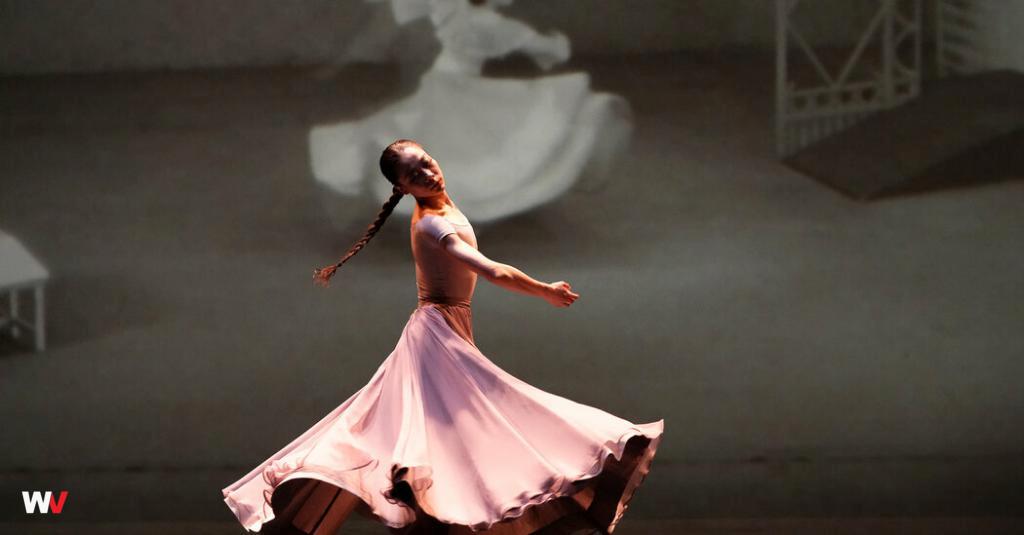
The most arresting performer in the Martha Graham Dance Company’s current season at the Joyce Theater died 34 years ago: Martha Graham.
In the intriguing premiere “Letter to Nobody,” which the outstanding dancer Xin Ying choreographed with Mimi Yin, Xin dances in front of archival footage of Graham in “Letter to the World,” a 1940 Graham masterpiece inspired by Emily Dickinson. As the image of Graham fades in and out, Xin attacks the task of copying it with full commitment and fitful success, embodying the spiral turns, the vacillations and the forward swoon that kicks a full skirt back and up into a crescent — the move that, captured in a photo, became an emblem of the work.
Near the end, Xin quotes Graham quoting Dickinson: “I’m Nobody! Who are you?” Then, in a projected excerpt from the 1957 film “A Dancer’s World,” Graham declaims about total identification with a role, but her face has been replaced with Xin’s. The use of A.I. here reads as an admission of the impossibility of replacing Graham.
It’s a candid encapsulation of the predicament perennially faced by this company and its dancers. In its 99th year, three decades after the loss of its founder, seven or eight decades since the height of her creative powers, the group named after Graham grasps after a legacy that fades in and out yet remains commanding enough to make relative nobodies of all who tend the flame.
Besides maintaining and performing Graham repertory, which this season includes “Frontier” and “Deaths and Entrances,” one tactic the company has tried in recent years is to reconstruct or reimagine lost works by Graham, drawing on photographs and other archival materials and using in-the-bones knowledge of her vocabulary to fill in the gaps. The latest examples are two solos from the late 1920s — “Revolt” and “Strike (From ‘Immigrant’)” — reimagined by the former principal dancer Virginie Mécène. (She first attempted this method in 2017 with the 1933 “Ekstasis.”)