General
Democrats Don’t Have a Shortcut Out of the Wilderness
The weakened condition of the Democratic Party leaves it ill-prepared to defend itself against a Republican Party determined to eviscerate liberalism and the left. Evidence of the fraught state of the party can be found everywhere. Pew Research asked …
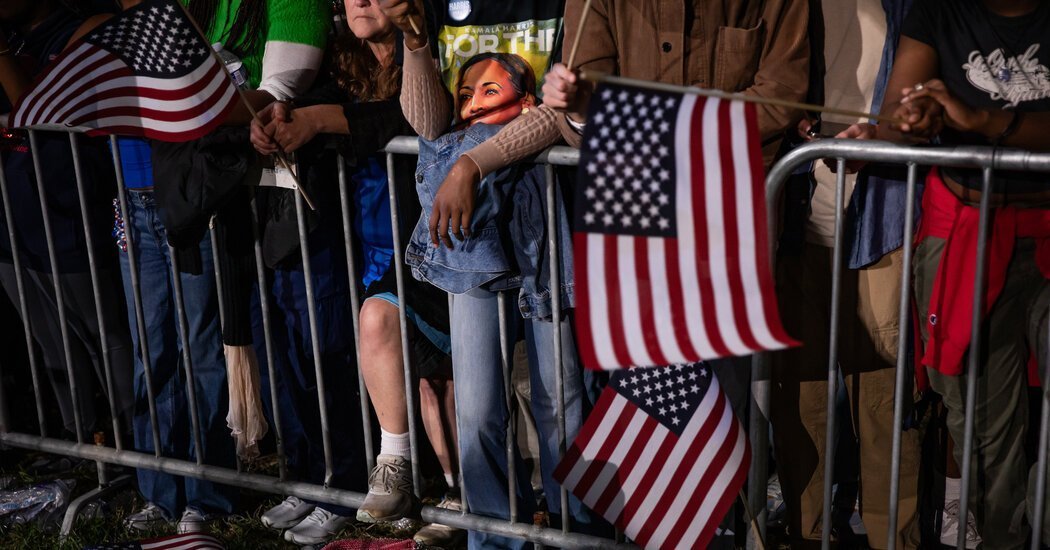
The weakened condition of the Democratic Party leaves it ill-prepared to defend itself against a Republican Party determined to eviscerate liberalism and the left.
Evidence of the fraught state of the party can be found everywhere.
Pew Research asked Democrats and Republicans whether they were optimistic or pessimistic about the future of their party after the five presidential and midterm elections from 2016 to 2024. Republicans in 2024 were more optimistic, 86-13, than after any of the previous four contests, including Donald Trump’s 2016 victory. Among Democrats, optimism fell to 51 percent, while pessimism rose to 49 percent, well below the 61-38 for Democrats after the 2016 election.
Ken Martin, the chairman of the Minnesota Democratic-Farmer-Labor Party and a leading candidate to become chairman of the Democratic National Committee, acknowledged this erosion of political clout in a memo to party leaders:
Polling suggests that Trump is ideologically closer to the median voter than Harris. Third Way, a centrist Democratic think tank, conducted a post-election survey asking voters to place themselves, Harris and Trump on a scale ranging from zero (very liberal) to 10 (very conservative). The mean response for Harris was 2.45, for Trump 7.78 and for all voters 5.63.
Matthew Dallek, a political historian at George Washington University, voiced serious doubts by email about the ability of the Democratic Party to compete successfully with the Republican Party:
In addition, Dallek went on to say, the centrality of anti-establishment themes in the MAGA movement makes opposition to it all the more difficult:
When Franklin Roosevelt called on the United States, “to become the ‘arsenal of democracy,’ ” Dallek wrote,
The pressure on the Democratic Party to assume the role of democracy’s defender has arrived at a difficult moment. Not only was the outcome of the 2024 election supremely deflating, but many of the party’s institutional allies are struggling to deal with setbacks.
-
Controversies over pro-Palestinian demonstrations and expressions of anti-Semitism, have forced the resignation of presidents of some of the nation’s most prestigious universities. From 2015 to 2024, the share of adults with a “great deal” or “quite a lot” of confidence in higher education fell from 57 to 36 percent, while those with “very little” or “none” rose from 10 to 32 percent, according to Gallup.
-
The two liberal cable networks, CNN and MSNBC, have experienced sharp post-election declines in viewership. Forbes reported on Nov. 29 that: “MSNBC’s prime time audience has dipped 53 percent since the week before the election,” closely followed “by a 47 percent drop by CNN — while Fox News has largely held onto its audience since President-elect Donald Trump’s victory.”
-
In city after city, voters have ousted liberal district attorneys, many whose campaigns were backed by George Soros. Many if not most of those prosecutors pressed for no-bail policies and for the abandonment of prosecuting selected misdemeanors.
What’s more, these cracks emerging in the institutional pillars of the left now accompany weakening Democratic support in three of its crucial constituencies: minorities, the young and urban voters.

Trump and his allies are more than willing to kick an adversary when he (or she) is down. Don Moynihan, a professor of public policy at the University of Michigan, described by email the probable Republican agenda:
Moynihan stressed that “that this is not about wokeness, or free speech; it is about Trump using government powers to engage in selective punishments and purges on a scale we really have not seen before.”
Perhaps most striking is Trump’s plan to excise a broad swath of the top ranks in the military, the crucial arm of government constraining or allowing authoritarian methods by the president.