Entertainment
4 Historical Novels Loaded With Witches, Fiends and Demons
The Oceans of Cruelty By Douglas J. Penick It’s believed to be one of the oldest story collections in existence, recorded in Hindi a thousand years ago, but with haunting origins that are even more ancient. As Douglas J. Penick remarks in the …

The Oceans of Cruelty
By Douglas J. Penick
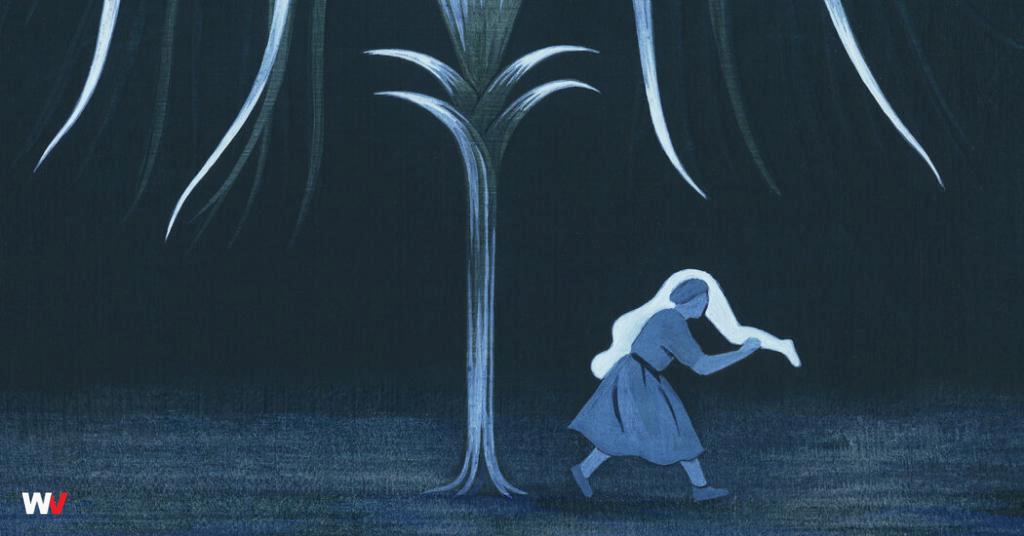
It’s believed to be one of the oldest story collections in existence, recorded in Hindi a thousand years ago, but with haunting origins that are even more ancient. As Douglas J. Penick remarks in the introduction to his retelling of THE OCEANS OF CRUELTY: Twenty-Five Tales of a Corpse Spirit (New York Review Books, 176 pp., paperback, $17.95), it reminds us of “human propensities whose lasting power we may prefer to ignore.” Imagine “One Thousand and One Nights” as told not by a young woman but by a vetala, a demon whose “whisper is like the crackling sound of a burning house.”
Tricked by a devilish yogi, King Vikramāditya is condemned to repeat a gruesome rescue, cutting down a corpse that’s hanging from a tree and carrying it on his back, “like a cape of cold mist,” as it relates a series of fables. At the end of each, the king must respond to a significant question — with the answer sending them back to the same tree to resume the same sequence of actions. Only at the end of this cycle will it be possible for either of them to be freed.
As the stories swirl around and echo one another, the virtuous king can’t help instinctively responding to the demon’s words, assessing the motives of scheming aristocrats, rival suitors and ambitious merchants, not to mention the caprices of rakshasas (shape-shifting fiends), gandharvas (celestial musicians) and apsaras (heavenly nymphs). One tale hinges on awkward revelations from a green parrot and a black mynah about their love-stricken owners; in another, a wife’s act of devotion results in a grisly form of resurrection. Throughout, Penick explains, the king’s life “is imprisoned in tales from the past, tales of deception from times that are no more.”
Yorùbá Boy Running
By Biyi Bándélé
The sinister aspect of history at the heart of Biyi Bándélé’s YORÙBÁ BOY RUNNING (Harper, 288 pp., $26.99) is the slave trade, whose malign influence continues into the present as the “spiritual scions” of the novel’s corrupt tribal leaders “continue to sell their people to the highest bidder.” The book opens in 1821 with a vivid portrait of a prosperous town in a declining African empire that’s about to be ravaged by warriors in search of human plunder. Ajai, the Yoruba boy of the title, is only one of the many lively characters in this early section, which has the aura of ancestral myth — a potent mix, as Wole Soyinka puts it in his introduction, “of the anecdotal, archival and inquisitional.”
Bándélé, a Nigerian filmmaker and playwright who died in 2022, uses the second half of the novel, mainly set 60 years later, to depict the similarities and dissonances of the following era, when British colonialism holds sway. Ajai now occupies center stage as Samuel Ajai Crowther, a real-life linguist, missionary and abolitionist whose liberation from slavery took him from a school in Sierra Leone to a religious college in London and even a meeting with Queen Victoria. He returned to his homeland as the first African bishop of the Anglican Church, only to be nudged, “ever so gently” but resolutely, from his place in the hierarchy.