
Fashion
Stettheimer Dollhouse, Cleaned and Buffed, Returns to View
After a two-year absence, New York’s most glamorous dollhouse returns to the Museum of the City of New York next month.
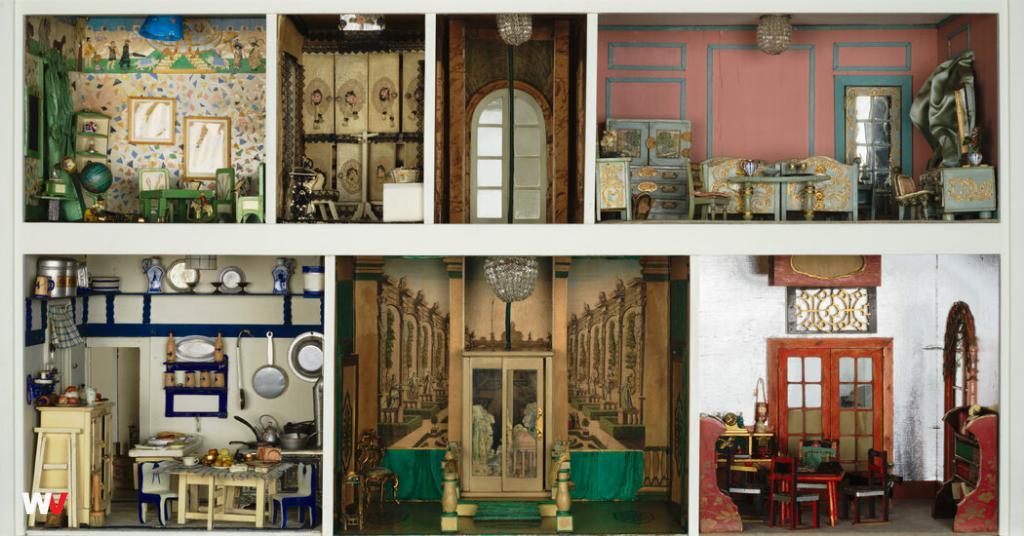
The Stettheimer Dollhouse, out of sight since 2022, when it was disassembled and spirited from the Museum of the City of New York to the Art Conservation Group in Long Island City, Queens, will go back on public view on Nov. 22. When it returns to a new room on the museum’s third floor, the 28-inch-tall mansion will have a new lighting system, an airier vitrine, brand-new high-resolution photographs to help visitors pick out details like the handmade mahjong tiles — and, perhaps most important, brighter, cleaner surfaces.
The 1920s New York society fixture Carrie Stettheimer spent nearly two decades furnishing the dollhouse with custom wallpaper and miniature amenities. She modeled it after André Brook, the Tarrytown mansion where she summered with her sisters Florine, a painter, and Ettie, an author. The dollhouse, built in 1916, has 12 rooms, an elevator and a grand salon. It also has an art collection that a real house could be proud of because the Stettheimers’ friends included William Zorach, who contributed a thumb-size bronze “Mother and Child”; Gaston Lachaise, who gave the sisters an equally minuscule alabaster Venus; and Marcel Duchamp, who gamely reprised his famously fractured painting “Nude Descending a Staircase” at postage-stamp scale. Before donating the house to the museum in 1945, after Carrie’s death, Ettie curated a little art show in the house’s salon.
Altogether, four conservators and a technician spent more than 240 hours over five months cleaning Carrie’s opus with cotton swabs and dental tools, taking care not to strip away an appropriate patina of age. According to Rebecca Gridley, an associate conservator on the team, the art needed the least attention. She and her colleagues cleaned just the sculptures with water, ethanol and what she called “a conservator’s favorite tool — saliva,” a fluid commonly euphemized, she added, as “a mild enzymatic solution.”
The rest of the house wasn’t quite so pristine. Over its nearly 80 years in the museum, the piece has inhabited multiple vitrines, not all of them equally airtight, and had last been conserved in 1999. The conservation team found the same layer of grime and dust you’d find in any unoccupied, century-old house that had last been cleaned 25 years earlier. Paint was lifting, flaking and cracking; adhesives were failing; furniture legs were loose; and in a few places, there was evidence of long-ago water damage. The collages on the nursery wall, Gridley said, were in particular distress.