Fashion
Elizabeth Catlett: Revolutionary Artist, Radical Inspiration
Once she was cast out of the United States. Today, her art and activism are front and center at an exhilarating Brooklyn Museum retrospective.
They didn’t have Zoom back in 1970, so when Elizabeth Catlett was denied entry into the United States to address a conference of the Black Arts Movement — for which she was a leading inspiration, a kind of luminary in exile — she had to deliver her speech by telephone.
The government had stripped Catlett of her citizenship eight years earlier, deeming her an undesirable alien after she became a Mexican citizen in 1962 and following years of surveillance for her leftist politics in both countries. But this hardly chilled her drive. In Mexico City, where she taught sculpture at the National Autonomous University of Mexico, she worked with local feminist groups while hosting a stream of American visitors and receiving by mail the newspaper of the Black Panther Party.
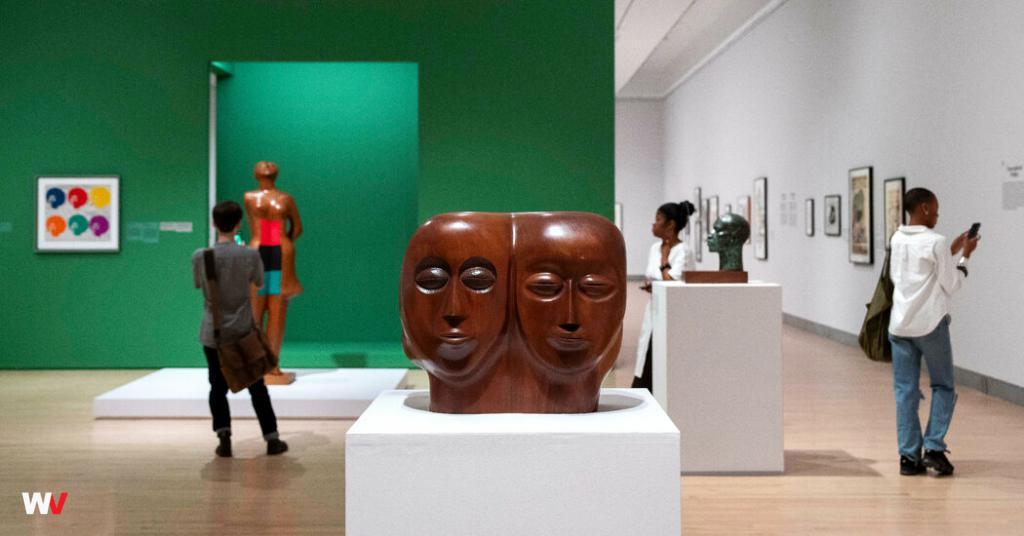
She made some of her most famous art — responding to and refining popular iconography — during this time. The warm-toned cedar sculpture “Black Unity” (1968) depicts a fist from one side and two stylized faces in the manner of African masks, side by side, on the other. The bronze “Target Practice” (1970), made soon after the deaths of the Black Panther activists Fred Hampton and Mark Clark in a Chicago police raid, shows the bust of a Black man who stoically faces the viewer through a rifle’s cross hairs centered on his face.
These and other works, including her linocut prints celebrating Malcolm X, Angela Davis or the Black communities that rose up in protest from Watts to Newark, crossed the border — shipped by her dealers or hand-carried by friends — and soon entered the zeitgeist. If her advocacy made her such a threat that her country of birth refused to admit her, Catlett told the conference by phone, “I hope I have earned that honor. For I have been, and am currently, and always hope to be, a Black Revolutionary Artist, and all that it implies!”